How Our Enemies Fight

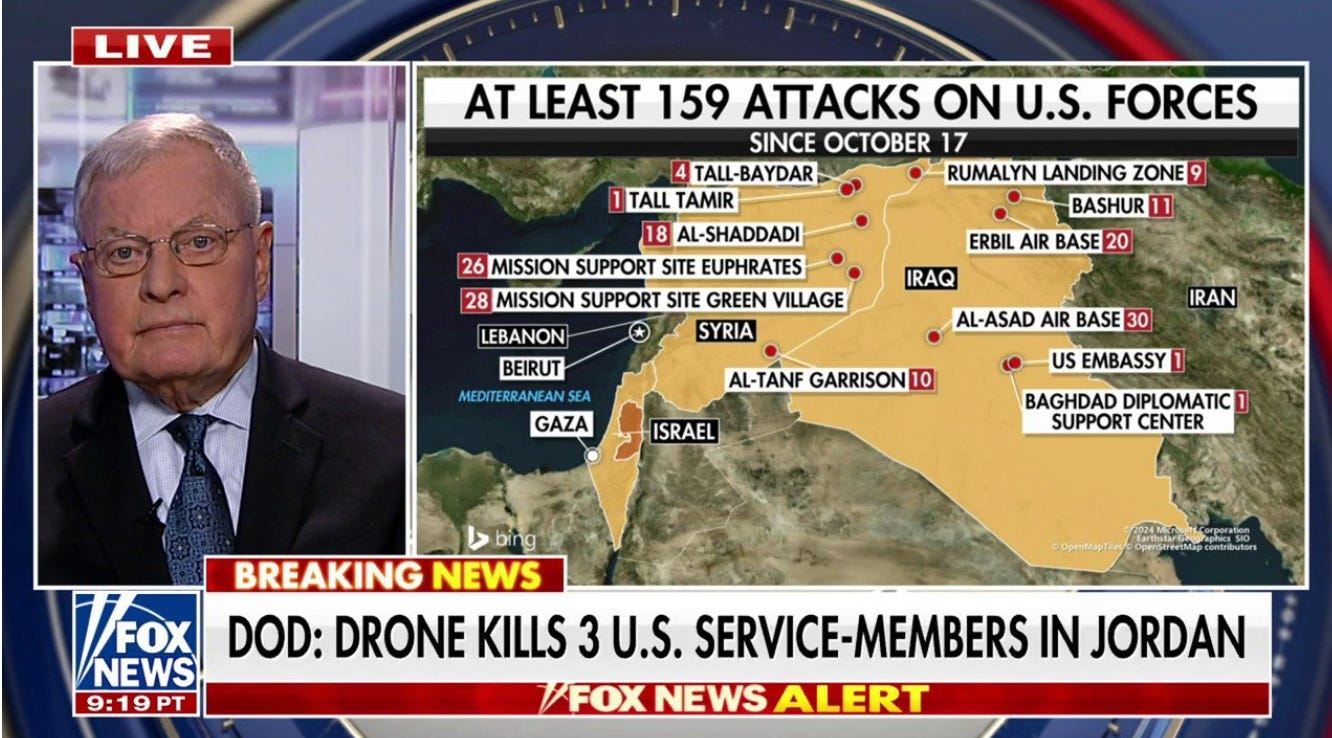
In Iraq, during the war I fought in, the imbalance in military power was almost comical. The United States could put satellites overhead, Predators in the sky, F-16s on station, special operations forces on the ground, and precision-guided bombs through windows. We could see in the dark and listen to their communications. We could move men hundreds of miles in hours and put a missile through a particular room in a particular house. In the history of warfare, very few militaries have ever possessed anything approaching the concentration of firepower available to an American commander in Iraq.
So, because the enemy there was smart, the enemy stopped concentrating.
The western way of fighting wars has always been to mass firepower at the decisive point. This was the point of standing men in rows on a battlefield, in lines two and three ranks deep. There wasn’t a better way to have a wall of lead crash into an opposing force than that when a well-trained musketeer could get off maybe 4 rounds a minute. It is central to what we think of as the Western way of war: concentrate men, guns, ships, aircraft, missiles, whatever the technology of the age permits, and create so much violence in one place that the enemy cannot withstand it. The obvious response has always been dispersion: if you cannot defeat the enemy’s concentration, don’t give him anything worth concentrating against.
That was what we experienced in Iraq. Nobody with a functioning brain was going to line up tanks in the desert and fight the United States Army after what happened in 1991. Saddam Hussein tried something resembling conventional resistance again in 2003, and his military disappeared with astonishing speed. The insurgency that followed learned that lesson. They learned real quick that if we could find them, we could kill them. So they made themselves hard to find by being everywhere and nowhere at the same time. They became a guy with a garage-door opener connected to an artillery shell buried beside a road, a part of a network, not a formation.
Twenty years later, we are watching another version of the same contest, and this time I worry that we are, what a century ago was the ultimate expression of concentration of firepower: the battleship.
We have the most sophisticated and expensive military in human history. A Tomahawk cruise missile costs around $ 2 million. A Patriot interceptor, really the only thing able to intercept the Russian and Iranian missiles, costs about $5 million, and they’re not quick to make. We are using them up far faster than they can be replaced, and this reliance on stand-off technology isn’t new in warfare, but it’s overwhelmingly new in how the US military now fights.
The battleship idea stretches back to the ship of the line of Nelson’s day, when admirals concentrated cannon into enormous wooden ships and then concentrated those ships into fleets. Industrialization led to even larger ships, more accurate gunnery, and ended the reliance on the wind. By the Second World War, Japan had produced Yamato, a 70,000-ton monster carrying 18.1-inch guns capable of throwing shells weighing thousands of pounds across the horizon. She was arguably the ultimate expression of the battleship idea, which made perfect sense: ships must be bigger, heavier, and better armored to win a contest against a platform that was actually just a lighter, less armored version of itself.
But then Billy Mitchell and his airplanes changed the geometry.
Airplanes, by the standards of the day, were not impressive. They were fragile, cheap, and relatively easy to destroy. But it did something the battleship could not: it separated the firepower from the platform delivering strategic power. Destruction could be dispersed among cheaper platforms that were, in the aggregate of a carrier versus carrier clash, packing enough of a whallop to put a surface vessel on the bottom, no matter how large.
Pearl Harbor provided the spectacular demonstration, but it was against a fleet at anchor, and did not drive the lesson home as urgently as the sinking of Prince of Wales and Repulse days later. The British Royal Navy lost the crown of it’s pacific fleet to a few dozen Japanese aircraft. Now, powerful capital ships underway at sea could be destroyed from the air. Eventually, Yamato herself went to the bottom under attack from American carrier aircraft in a suicide mission near the war’s end, well after the lesson had been learned. The greatest battleship ever constructed never fought the climactic battleship engagement for which she had been designed (the same was true for the Bismarck and the Tirpitz in the Atlantic).
Really, more than anything else, the economics of war had changed. If one side can destroy a fantastically expensive concentration of combat power using weapons that are cheaper, more numerous and more distributed, it has created conditions which take advantage of the ship of the line’s OODA loop.
The Iranians have known this for decades, and long before drones, they threatened the Staright of Hormuz with small, lightly manned speedboats. As any of my Surface Warfare Officer friends would attest, the danger was never that the Iranians could make the Strait completely impassable; the danger has always been that they could make it just impassable enough to spook oil tankers. And drones don’t even need to destroy to be effective; they can simply make the other side (us, in this case) maneuver and expend limited resources until something else can exploit the openings they have created. The exchange ratio is how they win. As with the IED problem in Iraq, we were forced to solve cheap problems expensively to protect our troops.
Once we found the enemy, of course, the outcome was rarely in doubt. The United States could bring almost absurd amounts of violence against a few men in a building; the only problem was that there were thousands of dispersed buildings. Dispersion and a Fabian strategy are how the Ukrainians have ground down Russia’s army over the last 4 years. Any significant concentration of men or equipment risked detection and destruction.
America and Russia are profoundly different countries with profoundly different militaries, but both have repeatedly committed the same kind of doctrinal stupidity: entering wars believing that overwhelming superiority in conventional combat power will solve fundamentally political problems. But it doesn’t because the weaker side disperses.
It happened to the British facing American militia on Battle Road in Concord. It happened to Napoleon in Spain. It happened to us in Vietnam, Iraq and Afghanistan. It happened to the Soviets in Afghanistan. It is happening differently, but recognizably, in Ukraine.
It all reminds me of the traditional boxing wisdom offered when fighting a dangerous, hard-hitting opponent: box a brawler. If he is stronger, more aggressive, and built to win exchanges in the pocket, you stay on your “bicycle”, use the jab, make him chase you, and frustrate him into overextending for attritive counters. The point is not really about boxing technique; it is about asymmetry. You don’t win by fighting your opponent’s fight; you win by making him fight yours.
We have spent generations becoming extraordinarily good at building exquisite things, because we were preparing to fight the Soviet Union, who, despite our differences, viewed warfare as we did: a problem of mass. F-35’s, Aegis weapons systems, and American submarines may be among the most complicated objects human beings have ever manufactured. Precision-guided munitions like JDAMs and Hellfire missiles give American commanders capabilities their predecessors could barely have imagined. But this tech dominance is brittle when the other side can throw lethal spaghetti at the wall indefinitely until something sticks.
A weapon that provides 80 percent of the capability but can be manufactured twenty times faster may be more useful in a long war than the perfect weapon that exists only in tiny numbers. And ten perfect interceptors do not beat 100 incoming bogies. Militaries have trouble accepting this because institutions become emotionally attached to platforms, and suggesting that a relatively cheap airplane might make them increasingly vulnerable was therefore not simply an argument about technology. It threatened careers, budgets, identities, and an entire conception of naval warfare. We should be careful about laughing at their proponents, however, because we are in the process of repeating the mistake.
The entire history of warfare is the search for ways to concentrate violence faster and more effectively than the enemy can withstand it. What changes is what must be concentrated to produce that violence. Once we massed men shoulder to shoulder, in open fields, 30 meters away from one another.
I remember Iraq partly as an endless search for men who intuited the way to fight us. They knew that if they concentrated, we would kill them. So they disappeared into neighborhoods, cars, farms and cities. They gave us almost nothing worth dropping our exquisite weapons on. It was maddening because it worked. What the Iranians are doing now appears to be working as well; they are boxing a brawler, and a military and civilian leadership obsessed with past greatness is not well equipped to defeat an enemy obsessed with present efficacy.
Looking back throughout history I only recognize 2 concrete instances when we had great or seemingly great victories against foreign adversaries. WWI and WWII and we had assistance and morality backing our involvement.
Few in this nation understand what it is you are speaking of and all for the reasons you provide. These people are foolish, selfish, and unprofessional to the responsibility to their duty to the US military and the country.
We do not need a “department of war” under some ridiculous religious testosterone spiked former national guard failure of a humane being.
We need a Department of Defense run by professionals who can perform a legitimate audit yearly and are up to date on the blend of weapons of war that are most effective for defense and assault. Get illicit money and future retirement to the warfare economy the hell out of appropriations and let’s start doing our job, to the best of our ability, to know what we need to properly conduct operations and what’s going on in the world around us…please.
You would think the lessons of Vietnam in the past with a determined dispersed enemy fighting on home turf and willing to take enormous losses would be instructive. Or we could look at Ukraine fighting Russia to a standstill with 2000 dollar drones and the help of US defensive missiles, an Army fighting an existential fight. We lack any diplomatic experts engaged in Iran, like Mattis said: ‘without diplomats you’ll need to make a lot more bullets.’