Minneapolis

I have a very low tolerance for cops shooting first and asking questions later.
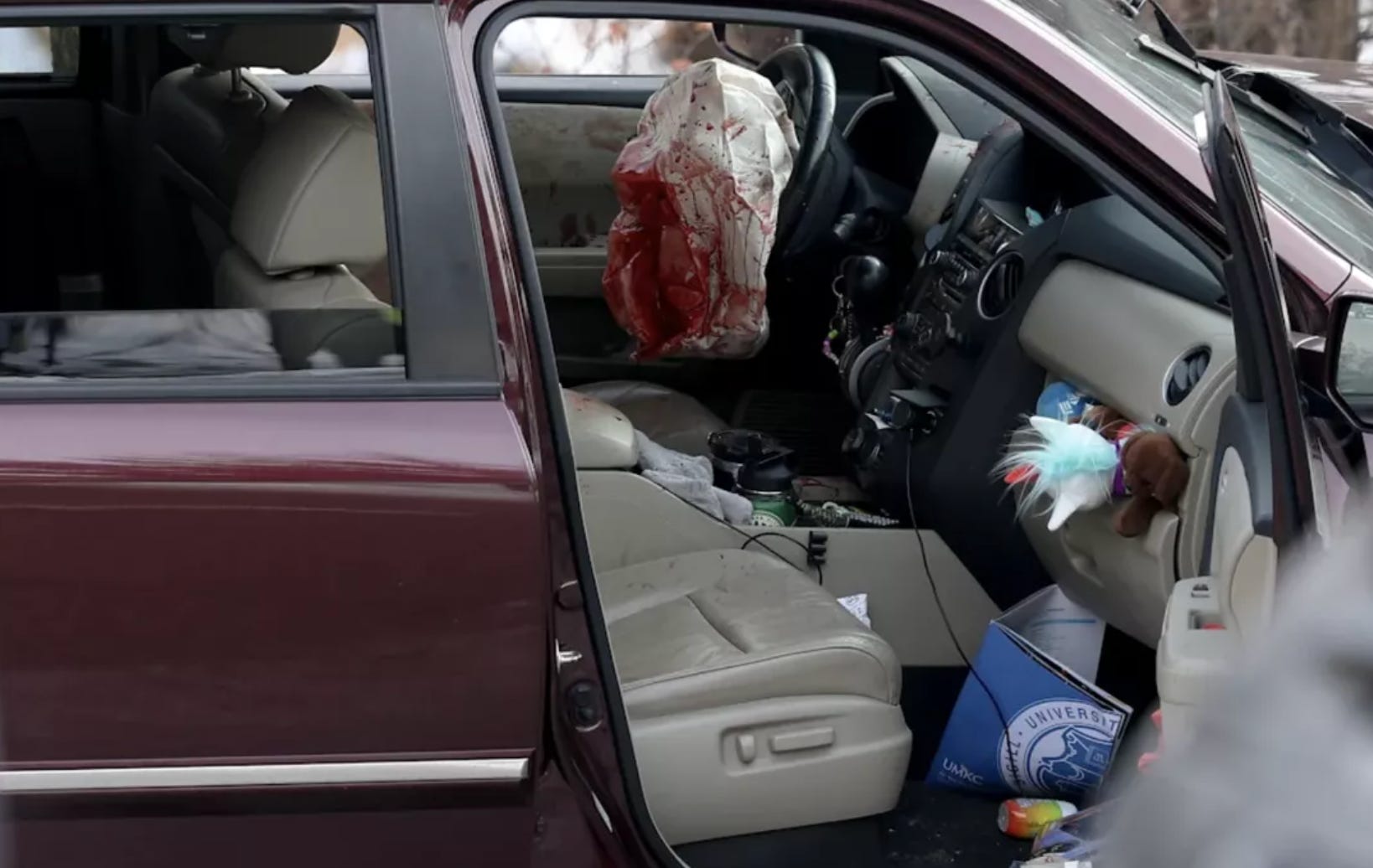
It’s not ideological. It’s professional. It comes from having been trained, over and over again, that the most sacred obligation of anyone authorized to use lethal force is proper target ID.
There was a moment in training which I’ve written about before, a Master Chief from SEAL Team 6 (I was not a “6” guy) was running us through a “shoot house” training facility in Mississippi. We were “shooting Sim” as we said, with changeable paintball kits for our M-4’s that allowed us to shoot at real people. On one of the house runs, a SEAL accidentally shot another SEAL. The whistles blew. We took a knee on the concrete. The Master Chief (I won’t use his name, but he went on to very big things) calmly, yet forcefully, told us the score. Know who you’re aiming at. Know why. Know what happens next if you’re wrong. You signed up for this. And that means you take the extra split second to ensure you need to shoot, even if that means you die.
I will never forget that. It was as close to the word of God as one could come in that line of work. Mentally, there and then, I told myself I would die if I needed to, as instructed. Others had done so before me, and I would not be the one to drop my shield.
Nate Hardy, my closest friend who was killed in combat, died in exactly that way a few months later. He did not drop his shield. He was in that same Mississippi shoothouse on that same day. He internalized the message. He died for it.
That was one thing I remember from training.
But there was another, contradictory part of the training I also remember. It only happened once, but it did happen. A vendor who taught us a somewhat bizarre version of hand-to-hand combat and prisoner handling (circa 2003) ended an exercise by pointing a video camera at us after a “bad shoot.” We were expected to say, into the camera, “I felt threatened.” This wasn’t NSW policy, and the man was not a SEAL, but it was a vendor hired by NSW, and he felt we needed to know what to do if we killed the wrong person.
His background was law enforcement.
“I felt threatened.” It was drilled into us as a legal necessity, not a moral one. Everyone knew the words. Everyone knew when they were true. Everyone knew when they were not. Training shapes instinct, and instinct fills in the gaps when fear takes over.
Fear itself is another explanation, and it deserves to be taken seriously. We are a nation awash in guns. Cops do die in the line of duty. Anyone who pretends otherwise is lying or ignorant. The job carries real risk. Fear is not imaginary.
But fear alone does not explain what we keep seeing.
The most uncomfortable explanation, the one people resist, is that some men want to use their weapons.
I wanted combat. I wanted to shoot “bad guys” in the face. I didn’t want chaos or confusion; I wanted clarity, purpose, and the brutal honesty of violence directed at an enemy who had chosen the fight. That desire wasn’t pathological; it was tribal. It was ancient. Men have always wanted to prove themselves in combat to their tribe. That instinct predates nations, laws, and uniforms. What matters is how a tribe constrains it.
SEALs and cops are not the same. The missions are different. The moral frameworks are different. But tribes are not different. The rules of the tribe reinforce what behavior earns status, approval, and belonging. If your tribe rewards aggression, dominance, and righteous violence, you will get more of it. If it punishes hesitation more than it punishes error, you will get speed at the expense of judgment.
And that brings us to the most corrosive force of all: America’s worship of justified violence.
We don’t merely tolerate violence. We revere it, so long as it’s framed as righteous. It’s in our founding mythology. The Declaration of Independence is, at its core, a moral argument for violence. We love the story of snapping when pushed too far. We love the moment when restraint ends, and force begins. We tell ourselves that this is strength, authenticity, masculinity.
And when violence happens, what we often love even more than performing it (most people are never in that situation), is cheering it.
Watch how quickly the narrative hardens. Watch how fast we are told who the victim really was. Pronouns. Dyed hair. Social markers that signal: not one of us. In this case, it was essential, especially because the victim was a young white woman, that she be cast outside the tribe. Violence requires distance. Justification requires othering.
Fox News was talking about pronouns while her body was still warm.
This is why the debate is always about whether someone is a “bad apple.” Everyone’s definition is different, conveniently narrow, and always absolving the orchard. But the problem isn’t the glorification of violence in the abstract. It’s the glorification of righteous violence. Violence as virtue. Violence as proof of belonging. Violence as the reason the tribe exists at all.
When harming others becomes the raison d’être of a social group, no one is ever going to skimp on violence. They will skimp on justification instead. The bar for pulling the trigger will quietly lower, because the tribe will rush in afterward to explain why it was inevitable, understandable, even noble.
There’s never enough justified violence to go around for the tribe.
Proper target identification is boring. It doesn’t flatter the ego. It doesn’t scratch ancient itches. It doesn’t make for good television. But it is the line between civilization and the mob with badges. The Jacobins wore uniforms. The Nazis wore uniforms. A uniform signals you belong to a tribe. The tribe protects its members at all costs if they project violence outward. That is the bargain.
Young men will always sign up for it. They will happily internalize the culture of that tribe, whether it is moral and just, or it is not.
If we cannot demand that line be held without tribal excuses, then we shouldn’t be surprised when the violence keeps coming, always already justified, always already cheered.
The truth is that enough of us, enough of the time, don’t want to change it. Enough of us want those cops to kill people, as long as they’re outside of whatever tribe we’re in.
What happened in Minnesota happened because our culture preexisted our law and our politics, and we don’t care enough to do the hard work of changing it.
Dr. Barkhuff, this is an extraordinary piece, and it stays with you long after you finish reading it.
What makes it so powerful is not just the argument, but the way you ground it in lived experience and professional memory. You don’t theorize about violence from a distance. You take the reader inside the moments where judgment, fear, restraint, and consequence collide, and you do it with a level of honesty that is both rare and uncomfortable in the best possible way. The shoothouse story alone should be required reading for anyone authorized to carry a weapon on behalf of the state. It captures, with brutal clarity, the sacred weight of proper target identification and the moral cost of getting it wrong.
Your willingness to hold two truths at once is what elevates this beyond commentary. You acknowledge fear as real, risk as real, and the ancient pull of violence as real, without ever excusing its misuse. The distinction you draw between moral restraint and legal cover is devastatingly clear. The contrast between “know who you’re aiming at” and “I felt threatened” exposes how culture and training shape instinct long before fear ever enters the room.
Most important, your examination of tribal reward structures and America’s reverence for righteous violence cuts to the root of the problem. This is not about bad apples or isolated failures. It is about what we cheer, what we excuse, and what we rush to justify when a uniform is involved. Your analysis of how narrative hardens, how othering happens in real time, and how justification outruns accountability is some of the most precise writing I have read on this subject.
This is not ideological writing. It is professional, moral, and deeply human. You force the reader to confront the uncomfortable truth that culture precedes law, and that until we are willing to change what we reward, defend, and normalize, the violence will continue to reproduce itself.
Thank you for having the clarity and courage to write this.
When I read that Renee Good had a wife, I quickly and accurately concluded that many would seize on this as a reason to justify her killing. It would serve as proof to the hateful and bigoted that she was not worthy of dignity-or of life.
And they would dig up other things, too….yes, use of pronouns…..political affiliation….only “woke” people would care about her.
I was awake half the night thinking of her and her family and this nightmare we are in because countless
people have failed us in preventing the felon from retaking the White House. And the fact that only 30% of registered voters chose this felon. It was not a landslide. It was not a mandate. Over 90 million reigstered voters shirked their right and RESPONSIBILITY to vote.