On Firsts

There’s a particular arrogance that comes with walking out of your first firefight.
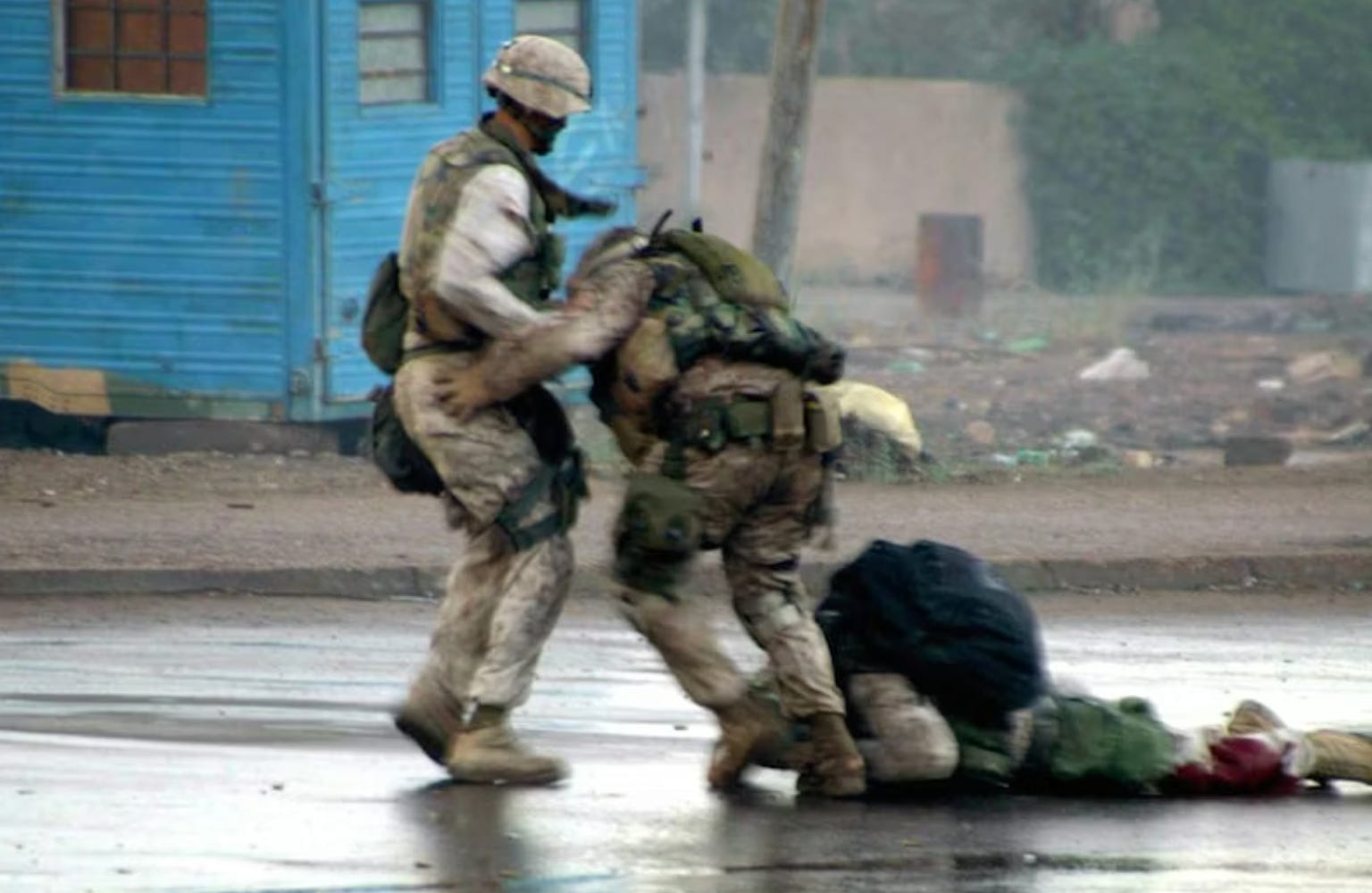
Mine was under a highway overpass outside of Fallujah. A nothing fight, really. A few rounds snapping into concrete and sand, ineffective fire into our position. We couldn’t see where it was coming from. The shots echoed and fractured under the bridge, the acoustics turning single cracks into something that sounded larger than it was. It intensified over a few minutes, more rounds, more angles, but it never felt precise. Clearly, insurgents knew we were there. They just couldn’t touch us.
I wasn’t overly worried.
I remember thinking that the ride back to base in our HMMWVs would be more dangerous. The insurgents were better at that. Their best attacks weren’t dramatic firefights; they were patient, asymmetric traps: Iranian EFPs and IEDs placed with the understanding that vehicles compress men into tidy packages. They wanted several of us at once. They were pretty good at it.
While rounds cracked overhead, a song looped in my head: “It’s a Shame About Ray” by The Lemonheads. It had been the last thing I heard before we rolled out that morning. Combat doesn’t always come with orchestral scoring. Sometimes it’s early-90s alt-rock playing on repeat in your skull while you crouch behind concrete and wait for someone braver or more reckless than you to expose themselves.
No one died that day. No one was even injured.
I came back to base energized. I’d finally been in combat. The thing you train for, rehearse for, imagine in sterile briefings and violent hypotheticals, it had arrived, and it hadn’t taken anything from us. I remember the strange lift in my chest that night. Combat felt easy. Manageable. Just get behind a big rock and shoot back.
That’s the lie of opening moves.
A couple of weeks later, when it came time to push into the city, men were killed by the dozens. The geometry changed. The enemy adjusted. The distance collapsed. What had felt like probing fire under a bridge became intimate and lethal inside streets and doorways. The learning curve steepened, vertical.
Opening engagements are often just that, jockeying for a grip on your opponent. Testing range. Probing weaknesses. Seeing who flinches. The first exchange rarely tells you what the third or fourth will look like.
The opening phases of any modern conflict involving the United States will look lopsided. Iran simply cannot hang in the kinetic realm of air attacks, stealth platforms, radar suppression, and stand-off weapons. We will strike from distance with precision that would have seemed mythological a generation ago. Targets will be hit. Facilities destroyed. Command nodes disrupted. Commentators will talk about dominance and escalation control. It will feel easy, and if you’ve never been in combat, that ease is intoxicating.
There is a seduction in believing that technological superiority equals strategic immunity. That, because you can reach out and touch the adversary without immediate visible retaliation, you have solved the ancient equation of war.
But adversaries adapt. They always do, and we can lose the initiative. That’s what the entire book (and movie) Black Hawk Down is about.
And somewhere in theater, on a base, on a ship, on a convoy, there will be a young man or woman who has never seen combat before. The first incoming rounds will feel distant, maybe even survivable. The adrenaline will spike. The brain will file it under manageable risk.
Until it isn’t.
I worry that policymakers who speak most confidently about kinetic exchanges have not felt that pivot point: the moment when a fight that seemed containable becomes something else entirely.
I’m not naive about Iran. Iranian-backed EFPs killed hundreds of Americans, some my friends, in Iraq. I have deep antipathy toward the regime. I understand the desire to dismantle a government that has trafficked in proxy warfare and regional destabilization for decades. If there is a reckoning coming, I believe it has been earned.
But war is not an abstraction. At some point, it is young people under overpasses with songs stuck in their heads. It is rides back to base where everyone is thinking, “get me out of this fucking four-wheeled coffin.” It is the illusion of control in the opening moments, followed by the slow realization that your opponent is learning, too.
When I see the news these past few days, I remember how easy that first firefight felt. It felt like we could not be touched. Maybe not at first.
The young version of me came back from that overpass energized. Combat had seemed straightforward. Contained. Almost simple. But weeks later, standing in a city that was devouring men by the dozen, I understood that the opening move had told me nothing.
And the perspective of those in the opening moments will not be the same perspective they carry when the fight matures.
We may find that there will be other songs to come.
Some angrier.
Some sadder.
Brother, you’re always on point. Written by someone who’s been there and done that … unlike that guy with bone spurs.
Thank you for the realism while others attempt to push the myth onto their mindless minions. “John Wayne” never existed.