On Graham
And "relevance"

The unexpected death of Lindsey Graham is a reminder that every one of us is living on borrowed time. We spend much of our lives assuming there will always be another election, another promotion, another conversation, another opportunity to become the person we imagine ourselves to be. Death has a way of exposing that assumption for what it is. It does not wait for redemption, it does not care about unfinished business, and it certainly does not concern itself with our plans to eventually make things right. Whatever we have become when our story ends is who we are.
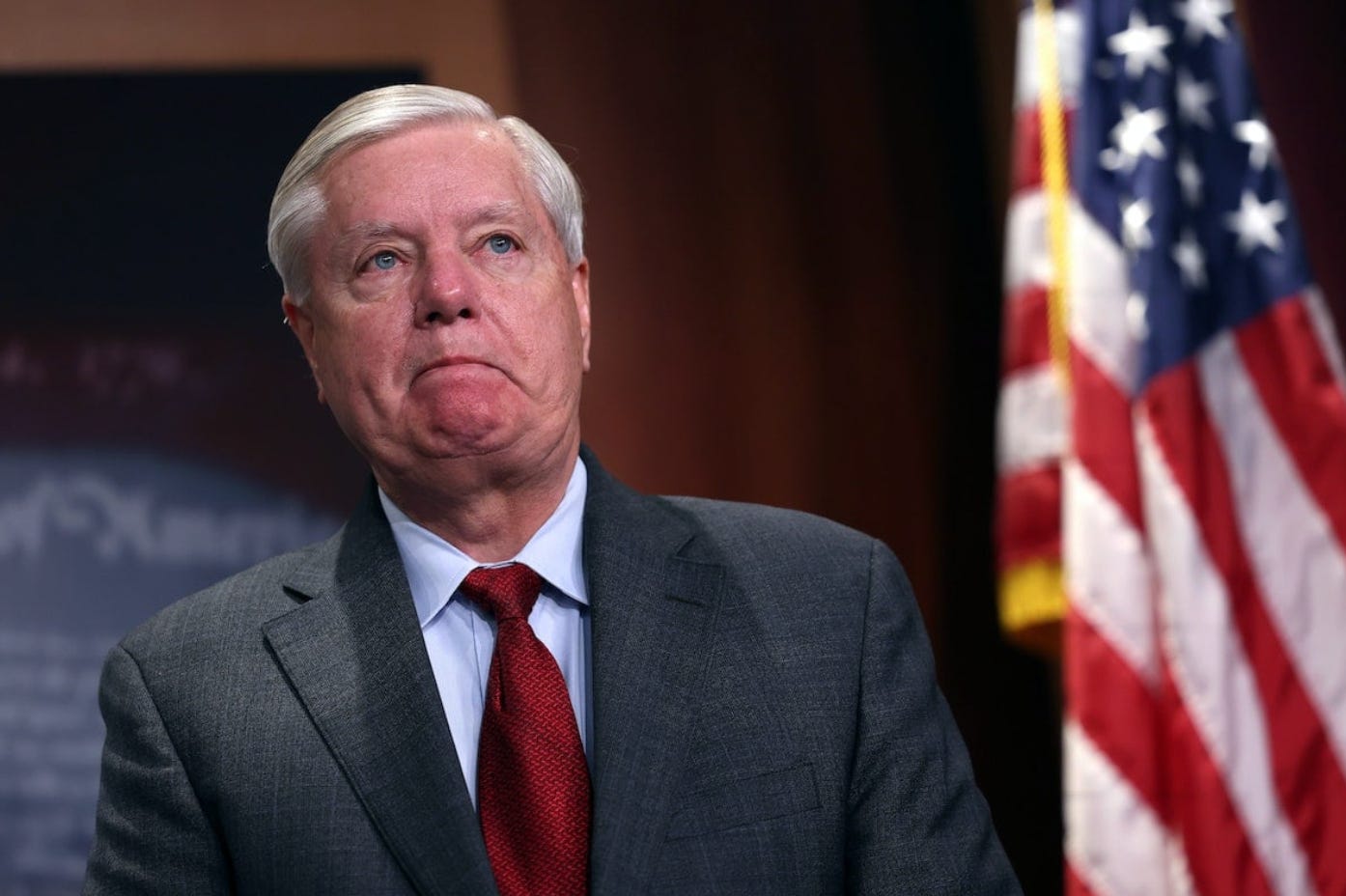
It’s very dangerous to believe we can always become the person we intend to be later.
I suspect Graham thought, as most of us do, that he had more gas in the tank. He probably assumed he would outlast Donald Trump, outlast this chapter of American politics, and eventually have an opportunity to explain the choices he made and reclaim the convictions he once held so publicly. I’ve met enough ambitious people to know that the majority of them think that today’s compromise is just the price of tomorrow’s influence. If only they can remain relevant a little longer, the lie goes, they will eventually use that relevance for something noble. But I could get hit by a meteor before I even post this, and the same could befall you before you read it.
As evidence, I cite Graham’s public statements before Trump was elected, and his private statements (as occasionally leaked) since. During the 2016 Republican primary, he recognized Donald Trump as a profound danger to American conservatism and to the constitutional order itself. He called him unfit for office and warned Republicans that embracing him would fundamentally change the party. That’s not a confused man. That means that the moral compromise once Trump was elected was not born of ignorance but of calculation.
This is the moral coward’s calculation. Graham believed he could survive his compromises because they were temporary. Trump would eventually be gone, history would move on, and he would remain. He could recover his reputation after the political winds shifted. He could always reclaim the moral ground he had surrendered because he believed he would still be standing when the opportunity arrived.
Instead, he died.
Lindsey Graham was a moral bagman. He collected moral compromise the way a child fills a bucket with seashells. Some of us carry grocery bags, filled with the ordinary burdens of providing for our families and making ends meet. Others carry body bags, bearing the unimaginable weight of bringing home the young Americans who never returned from wars they were asked to fight. Lindsey Graham became something different, carrying someone else’s bags in exchange for continued relevance and proximity to power. In doing so, he helped enable an administration whose wars of choice sent Americans home in body bags while its economic decisions made it harder for families to fill their grocery bags. He cost us American lives. He cost us American dollars.
Graham was also wrong about his bet in another way. History doesn’t, in the aggregate, remember the people who remain relevant the longest. It remembers the people who remained faithful when faithfulness became expensive. Graham undoubtedly succeeded in preserving his place at the center of Washington’s political conversation. Until the day he died, cameras sought his opinion and he was treated as an indispensable player. Relevance and greatness are not the same thing, however. One is measured by how often people ask for your opinion, while the other is measured by what you are willing to lose in order to keep your integrity.
Graham’s death is a reminder that none of us should assume we will someday become the people we hope to be. We imagine there will be time to apologize for old betrayals, to stand up for principles we have quietly abandoned, or to finally tell the truth after years of telling ourselves that the timing was not yet right. We picture a future version of ourselves redeeming the present one, but life offers no guarantee that the future will ever arrive.
The ancient Stoics encouraged people to remember death not because they were morbid, but because they understood that mortality sharpens moral clarity. If today were the last chapter of our lives, the excuses that seemed so persuasive yesterday suddenly lose their force. Ambition becomes less important than honesty, and popularity becomes less valuable than courage. The approval of the powerful does not matter in a hospital bed. It matters even less in the morgue.
Lindsey Graham’s legacy will not be debated by historians, political allies, and his critics, because he died small, exactly as he lived over the last decade. It is, however, a reminder that there is never a better moment than the present to become the person you claim to be in your best moments or the person you wish you had been in your worst ones. We are all carrying our own bags, and none of us knows when we will set them down for the last time. The only question that ultimately matters is whether, when that day comes, if we can lie in repose unencumbered by how we stood when we had the chance.
We all have choices to make in our lives. He chose to sell his soul.
“We are our choices,” Sartre said. History will not be kind.
"Whatever we have become when our story ends is who we are." Truth!
The people who know better but choose moral compromise anyway are the most contemptible people on earth. Graham chose his path, and now that will be his legacy - not anything that came before it. Everyone dies. Not everyone is mourned, or deserves to be.