On Men
Part 1

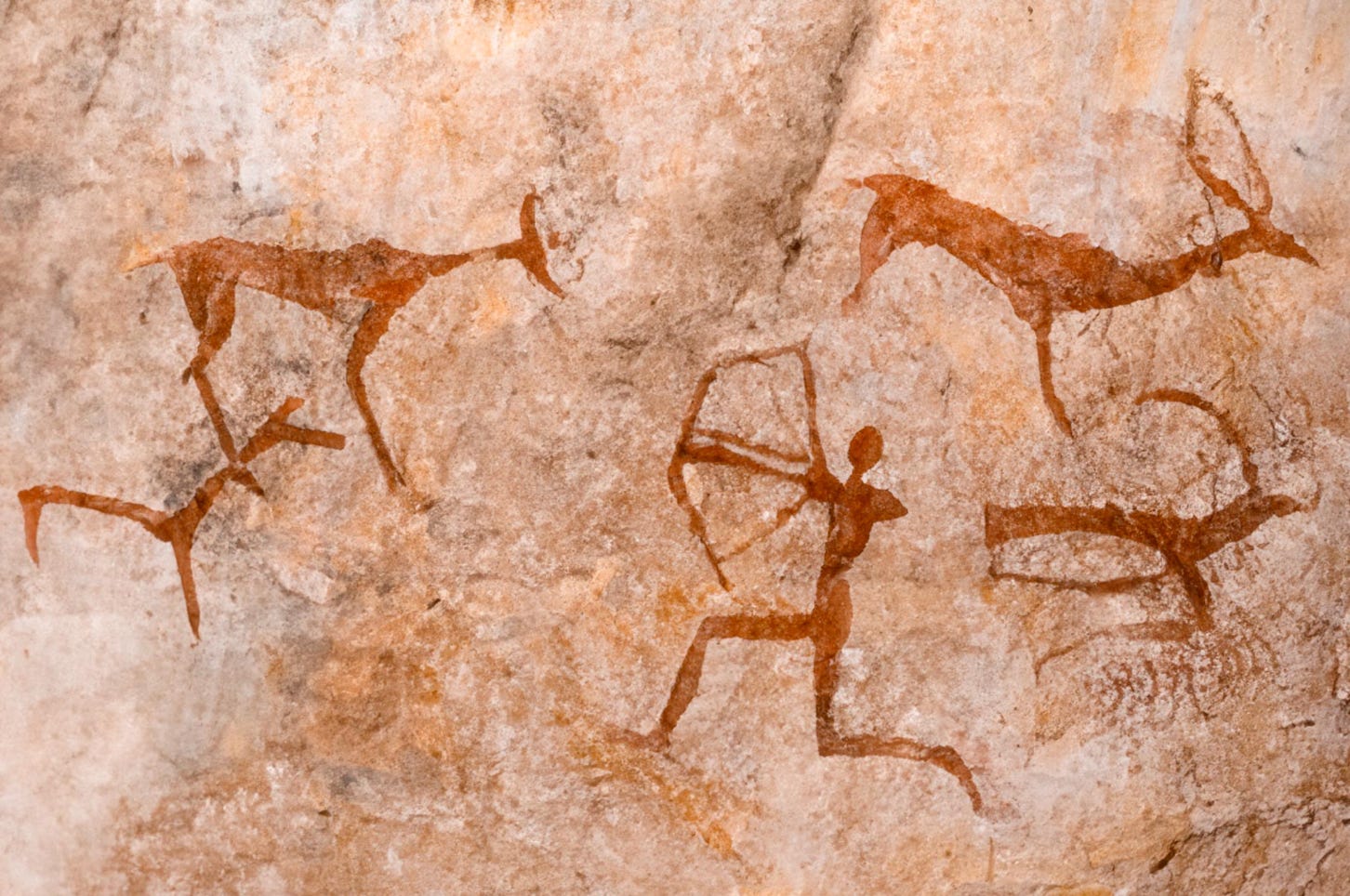
For as long as human beings have socialized, which, of course, is forever, men have entered the world with a set of expectations already waiting for them. Before a boy understands politics, philosophy, or religion, he begins absorbing a quiet message from the culture around him: you are expected to become useful. You are expected to endure, and you are expected to protect. You are expected to be capable when capability is required.
The specifics vary by era and geography, but the underlying pattern is quite consistent across history. A Greek in a hoplite with men from his polis, a farmer on the American frontier facing winter with a failing crop, a steelworker in Pittsburgh in 1954, and a modern father waking up exhausted to go to work so his children feel safe all inhabit radically different worlds. Yet beneath the surface differences lies the same thread: men are admired when they can be relied upon to shoulder burden for others.
The details of masculinity change. The core rarely does.
Across cultures, the men who earned status were usually not merely the strongest, but the most useful to the survival of the group. This held supreme relevance on the field of battle, clearing forests and planting crops, and in organizing tribe members or citizens of nation-states to sway the direction of the entity. Competence mattered. Reliability mattered. Courage mattered. Sacrifice mattered.
This did not mean men were always virtuous. History is filled with violent, selfish, cruel, and destructive men. Masculinity has never automatically produced goodness. But even deeply flawed societies tended to reward certain masculine traits because civilization itself depended on them. Human beings survived because enough men accepted difficult and dangerous responsibilities. Enough men valued their performance of masculine duty over their own, selfish needs.
A society could admire the cunning strategist in one era and the stoic provider in another. Some cultures valued physical ferocity more heavily; others emphasized discipline, craftsmanship, or wisdom. Even honesty, which we now often consider a universal virtue, was interpreted differently depending on the civilization. The ancient Greeks admired Odysseus not merely for bravery, but for cunning. Medieval courts often rewarded political manipulation alongside valor. Frontier cultures sometimes respected men who bent rules to survive harsh conditions. Human morality has always contained complexity, often lent to it by the expediency necessary for the time and place.
But beneath those variations, there remained an assumption that a man was expected to contribute something larger than himself. A man who only consumed, who only sought comfort, who avoided responsibility altogether, was rarely admired for long.
Women, of course, have historically faced their own immense and often conflicting expectations. For most of human history, women carried enormous burdens surrounding childbearing, caregiving, maintaining households, social cohesion, attractiveness, emotional labor, and, increasingly in the modern era, professional success as well.
But there is something different there as well. The cut “she’s not a real woman,” does not occupy space in our collective imagination in quite the same way as “he’s not a man.” Denzel Washington doesn’t chuckle, “woman up,” at Ethan Hawke in Training Day when he coughs after taking a hit. The social opprobrium hits differently.
The male experience contains its own distinctive pressure, tied heavily to conditional worth. Men have often internalized, consciously or not, the belief that they are valued primarily for what they can do under strain. Can you provide? Can you solve problems? Can you absorb hardship without collapsing? Can you protect others when circumstances become frightening? Can you remain useful when things become difficult?
The modern world often pretends these expectations no longer exist. But they do.
When disaster strikes, we still expect men to run toward danger. When a strange noise occurs downstairs at two in the morning, all things being equal, who is getting out of bed to check the locks? In crises, men are still often judged according to their composure, capability, and willingness to sacrifice. Even in progressive societies that consciously reject older gender roles, ancient instincts remain stubbornly present beneath the surface.
What has changed dramatically is not necessarily the expectation itself, but the landscape in which men fulfill it.
For most of history, masculine duty was concrete and visible. A man could point to the field he plowed, the wall he built, the enemy he fought, the machine he repaired, the railroad he laid, the family he fed. The feedback loop between sacrifice and usefulness was immediate. Men understood where they fit because survival itself made their role obvious.
Today, many of those traditional avenues have either shrunk or disappeared entirely.
Modern life is safer, more automated, and more abstract than the world our ancestors inhabited. Physical labor has declined. Communities are weaker. Religious institutions hold less influence. Many men work jobs where the fruits of their labor are intangible and difficult to connect to any larger human purpose. Young men increasingly delay marriage, fatherhood, homeownership, and stable careers. Entire sectors that once gave working-class men identity and dignity have vanished. There is a massive societal opportunity cost when young men live in their parents basement until they are 30, not least of which is driven by this: the ancient psychological wiring remains.
This creates a strange contradiction. Society still quietly expects men to possess resilience, courage, discipline, and competence, but many men are no longer given meaningful opportunities to exercise those traits in visible ways. The expectations linger anyway.
My suspicion is that much of the modern male crisis emerges from this gap.
The common explanation is that society asks too much from men. There is certainly truth in the idea that some expectations placed upon men can become unhealthy or crushing. Men are, on some level, taught they must never show emotion, never ask for help, or never fail often suffer deeply in silence.
But I suspect another reality exists alongside that one: we are also asking too little from men. Many young men today are not overwhelmed by meaningful responsibility.
They are starving for it.
There’s a late 30’s blue belt at my jujitsu gym. Divorced, in recovery, opiates. He’s not very good at grappling, but he helps with the kids’ classes. He was beaming when he told me the other day that, since he started, he has never missed a day or been late once.
Does that sound like the response of a man who needed to be asked for less?
Human beings derive purpose not merely from comfort, but from necessity. Men throughout history endured terrible hardships not because suffering itself was noble, but because hardship attached them to meaning. A man protecting his family during winter may have been exhausted, frightened, and miserable, but he knew exactly why he mattered.
If the situation is “come home with a dead deer or the entire family dies of starvation,” you are not walking out into the forest questioning self-worth.
Today, millions of men drift through environments optimized for consumption rather than contribution. Endless entertainment, pornography, social media outrage, gambling apps, algorithmic distraction, and low-stakes digital existence offer temporary stimulation without requiring sacrifice. Many men no longer feel needed in a profound sense. And a person who does not feel needed often struggles to feel fully alive.
This may explain why so many modern men gravitate instinctively toward difficult things even when easier options exist. They train for marathons, combat sports, military service, ultramarathons, hunting expeditions, entrepreneurship, dangerous jobs, and brutal physical challenges. They seek environments where effort still clearly matters. Where competence still matters. Where weakness has consequences. Where sacrifice can still be transformed into identity (*author’s note, I believe the TV Series The Office is an early warning shot about the crisis of masculinity that we all missed).
At the deepest level, many men are searching for proof that they are capable of carrying weight.
We are living through the first period in human history where enormous numbers of men no longer have obvious access to the traditional mechanisms through which masculine identity was formed. For previous generations, adulthood itself forced initiation. War, labor, marriage, fatherhood, survival, and community obligation imposed responsibility whether a man felt ready or not.
Now, many men can avoid responsibility indefinitely. And while this appears liberating on the surface, it may actually produce deep psychological instability underneath.
Because the ancient question remains. Are you a “real” man?
You can only distract yourself from that question for so long before it begins to echo in the quiet parts of your life.
Scott Galloway has been bringing up this same issue recently. The trades, electricians, plumbers, carpenters started fading in popularity in early to late 80's. I learned my trade in the USAF. I was a corrosion control specialist. We would inspect the aircraft for corrosion and order the appropriate corrective action. Over simplifying it, we were the autobody guys of the AF. Although CE handled all the vehicles on base. We took care of the aircraft and the support equipment. When I got out in 85 I started painting cars. From that time on it got harder and harder to find workers. Tech schools were closing. It was not pleasant work. Seeing a repaired car with shiny new paint was rewarding. I left the auto body field after the insurance became too involved. I worked harder and made less. I got involved with my local fire department. I went to school to become a paramedic. Staffing is challenging in this field as well. In many ways I found autobody to be more rewarding. I used my hands to fix something. I saw it come in wrecked and I watched it leave shiny and, almost, new.
I sort of got off on a tangent. I realize that the trades aren't just a male work force. Part of me is asking, when and why did this start happening.
I'm envisioning a great, massive effort to recruit young men into public service jobs. There are many models as to what form those jobs would take but at their core would be the assumption of taking responsibility for others. New tribes. Dedicated to improving the lot of others and in doing so, experiencing the rewards of achievement, of clarity, of belonging. The algorithms are no place to learn a trade, to forge a job or career. If we are to survive this next great cycle of change in the country, the need for a reboot of our character, the roles that are best suited to accomplish our goals, we will need boys and men to have the opportunity to learn what giving one's best, or even just giving, is all about. The space that has been wrought by the awful of today's politics, economic insecurity, gender slanders and abuses of power will actually provide an opening for men--and women--to reclaim or redefine their happiness. Providing help for others, community service, gets us at least half way there.