On Moral Cowardice
What Hegseth Didn't Say

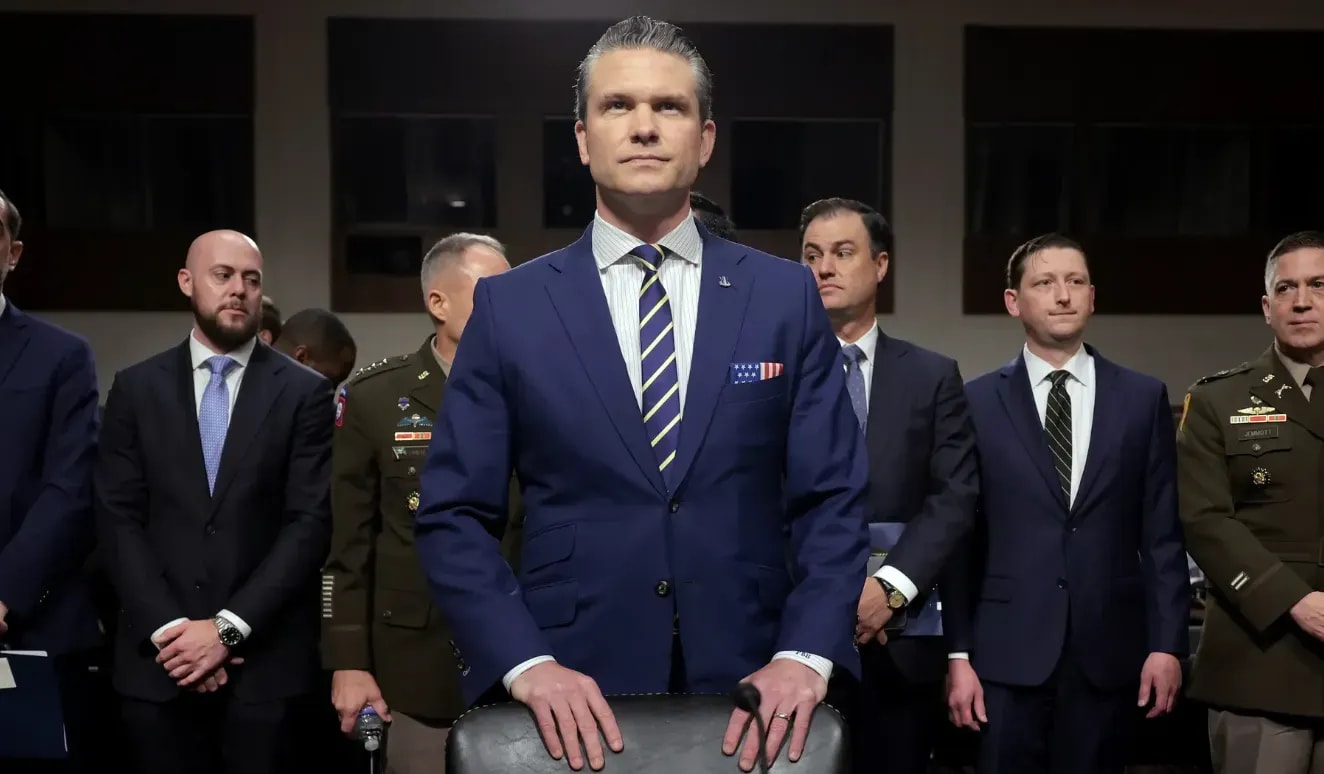
Pete Hegseth testified on Capitol Hill this week on his war in Iran. It is his war simply because without him, there would certainly have been no war. Of course, other individuals (Trump, Netanyahu, Caine) all own these American deaths and American waste as well, but Hegseth is the sine qua non of the lunacy America is presently engaged in. If you expected anything more than whining and blame-shifting from those in command, you would have been disappointed.
Genuine accountability after a war with Iran would sound something like this:
“We, the Republican Party and Donald Trump, won an election, and part of that election was a debate about foreign policy. One of the pillars of our policy was that Iran joining the fraternity of nations capable of annihilating a city with the push of a button was unacceptable. The American people understood that our position carried risks, and they entrusted us with the authority to act.
I mourn every American son and daughter who has died in this conflict. Before this hearing today, I vomited in a trash can because I knew I was about to speak about people whose parents tucked them into bed, whose spouses kissed them goodbye, whose children will grow up with hazy memories instead of plans for the holidays. There are no words that can erase that loss, and if I could trade places with them, I would. I honor their sacrifice not with empty slogans but with the understanding that they paid a price I never will.
Here is the difficult truth: they died to make you safer. They are now gone, and you remain. That is the terrible arithmetic of war. It is never clean and it is never fair. But it is the responsibility of civilian leadership to decide whether the security gained justifies the blood that is spent.
I take full responsibility for that decision. I encouraged President Trump to wage this war. I encouraged these young men and women to fight it. I signed the orders. Their deaths are not simply tragedies that happened during my tenure. They occurred because of choices I helped make. That burden belongs to me now, forever.
There is a saying in the military, “rank has its privileges.” Sometimes, this means creature comforts and an exemption from the privation and risk of modern war. But there is another saying as well, “rank has its responsibilities,” and I would happily take MRE meals and indirect fire attacks in place of what my role in this war has been: to make hard decisions that have led to the deaths of those under my command.
I continue to believe those choices were right. Leadership does not mean pretending that difficult decisions are painless. If preventing a nuclear-armed Iran required the use of force, then I believe history will conclude that we made the correct decision, despite its terrible cost.
But believing a decision was correct does not absolve me of responsibility for its consequences and the burden is heavier precisely because I believe it was necessary. Every casualty is now a permanent companion I will carry for the rest of my life, and very folded flag is a reminder that strategic decisions are measured in birthdays missed, children left without parents, and families permanently changed. I know their names, I pray for them every night before bed, and I pray for their forgiveness and understanding of what I asked of them.
The least I owe those Americans is honesty. I asked them to accept extraordinary risk in pursuit of what we believed was the national interest. That responsibility cannot be delegated to generals, hidden behind talking points, or explained away by saying that war is dangerous. It rests with those who choose war.
The obligation that follows is equally clear. I must spend lives wisely because they purchased something precious with the only currency they possessed. I owe them a relentless commitment to ensuring that currency is never wasted. Civilian control of the military is one of America’s greatest constitutional strengths precisely because elected leaders, not soldiers and not armchair critics, bear ultimate responsibility for deciding when the nation fights.
For all the grieving families, I am willing to say publicly and privately, “I made this decision. I believed it was necessary. I accept responsibility for what it cost. I will carry that burden for the rest of my life, and I will honor your sacrifice by ensuring your loved one’s life was spent as carefully and as purposefully as humanly possible.”
Pete Hegseth didn't say that, of course. And his failure to do so brings to mind the final line of Hemingway's The Sun Also Rises, itself a meditation on what war leaves behind in young men: "Isn't it pretty to think so?"
A compelling speech - if only.
Of course, I don’t believe for a minute that Trump or Hegseth were really motivated to prevent a nuclear Iran. I mean, for one thing, there was the JCPOA. For another, there’s MAD — and Iran is rational enough to be averse to suicide. And, if we’re so worried about nuclear proliferation, why are we about to greenlight the Saudi nuclear program?? Because they’re noble actors (ask Khashoggi)? Because they’re so enlightened and progressive? Because they forked over $2 billion to Kushner?? Kind of belies Trump’s go-to excuse for starting this profoundly stupid and purposeless war, doesn’t it?
Exactly, but testosterone is more important.