On Weakness

There is a recurring pattern in political movements that define themselves less by what they build within existing frameworks and more by what can be done to them. They become refuges, not for the competent, who can thrive anywhere, but for the compromised and opportunistic. This pattern is not unique to any one country or era, but it becomes especially visible in moments of democratic stress. In that sense, the appeal of Trumpism under Donald Trump can be usefully compared to aspects of the systems built by historical autocrats, not as a claim of identical outcomes or equivalence in scale, but as a study in how power can be consolidated by elevating loyalty over competence
.
One of the most effective short-term strategies for securing power is to promote people who would not otherwise rise. When advancement depends not on merit but on personal loyalty, those elevated understand that their status is contingent. They are not broadly employable; they are not widely respected outside the system that lifted them. Their mortgage, their relevance, and their identity are tied directly to the leader. The dependence is essential.
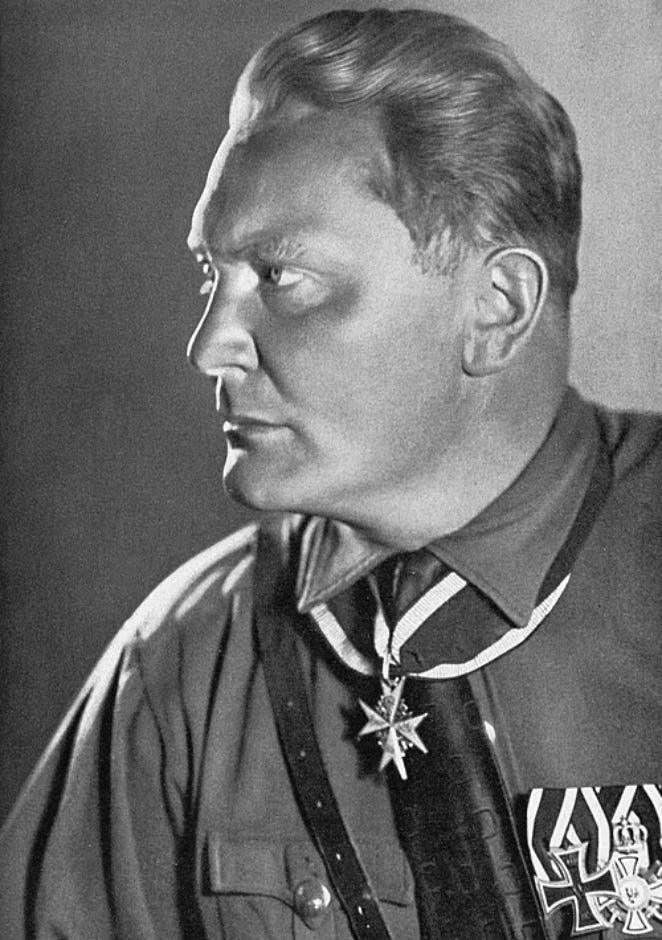
This dynamic was central to Nazi Germany. Hitler repeatedly bypassed experienced professionals in favor of loyalists whose primary qualification was devotion. Figures like Hermann Göring, an opiate addicted narcissist, accumulated immense power despite glaring incompetence in the roles they were given. The result, over time, was a hollowing out of institutional effectiveness. At scale and over time, this led to catastrophic military failure. Loyalty could not substitute for logistics, strategy, or technical skill.
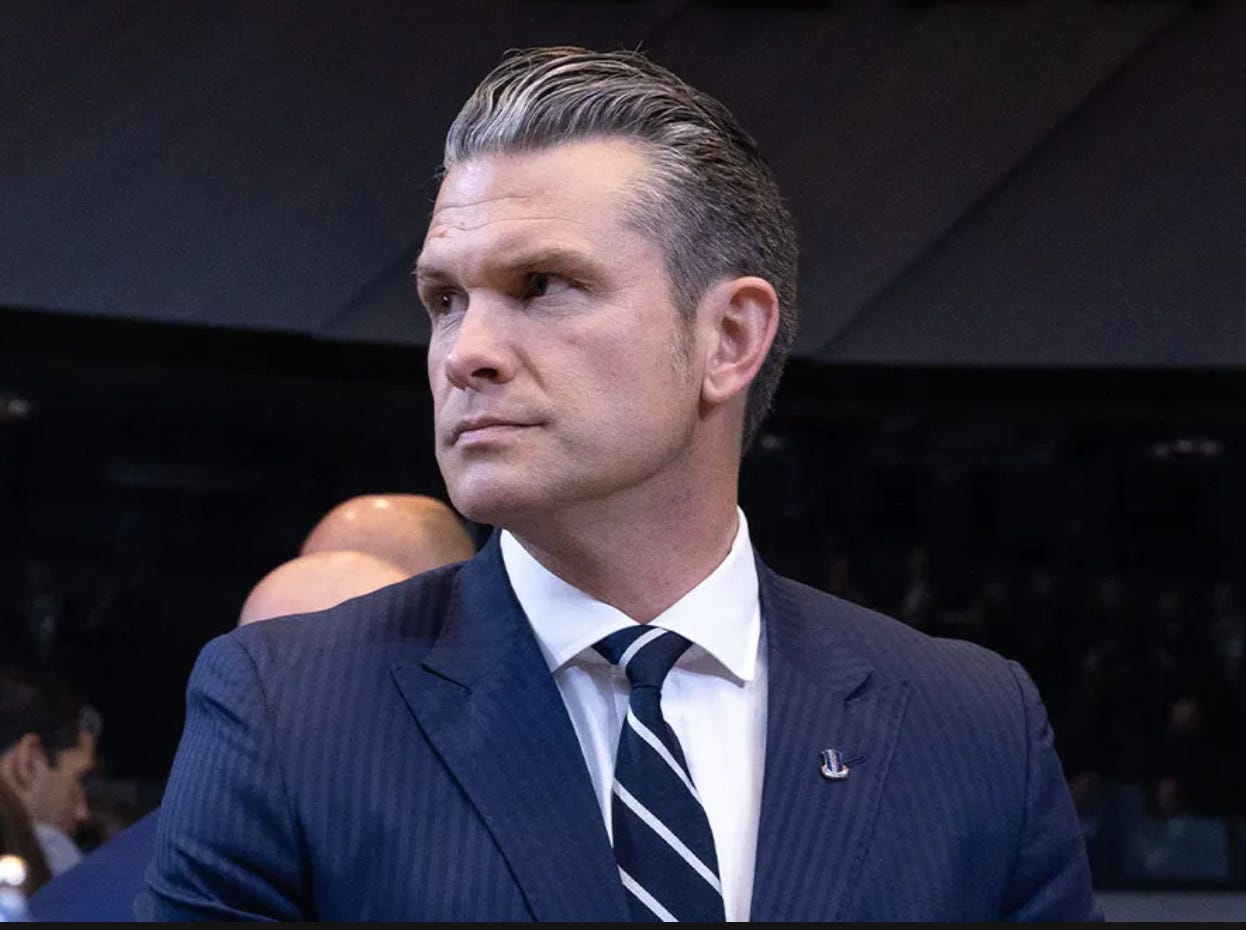
We had a saying in the SEAL Teams, “ don’t confuse enthusiasm with capability,” and I think of it every time Pete Hegseth gets in front of a camera.
This trade, loyalty for competence, is ancient. The Roman Emperor Commodus surrounded himself with flatterers and political dependents, accelerating the decline of administrative rigor. In the Soviet Union, Joseph Stalin purged experienced military leadership in favor of loyalists, a decision that contributed to disastrous early performance in World War II before necessity forced a partial reversal.
But the parallels with Goering resonate most strongly. A makeup studio at the Pentagon. A history of substance abuse, now (perhaps) sidelined for the new drug, approval from the Dear Leader. A constant overestimation of the centrality of “manliness” in complex combat operations defined by cutting-edge technologies like radar in the Battle of Britain and drones in the Persian Gulf. A belief in punishing air bombardment as a coup de main, which has a deep history of failure at operational and strategic levels (see Operation Rolling Thunder).
At least with Goering and the Battle of Britain, it hadn’t been tried before.
What makes the strategy of running your wars with a weak narcissist effective in the short term is precisely what makes it dangerous in the long term. It creates a tightly bound inner circle that will defend the leader at all costs. It eliminates dissent, streamlines decision-making, and ensures message discipline, while simultaneously stripping away the corrective mechanisms that keep systems grounded in reality. This is how you ignore decades of war gaming about the Strait of Hormuz.
Because if you’re enthusiastic enough, maybe, just maybe, that is a capability all its own.
Except it never works like that.
Hegseth’s insecurities are particularly telling. Since Vietnam, the United States has gradually come to understand that its strength lies in its ability to draw on the full breadth of its population. This is not a matter of ideology but of effectiveness. A force that excludes talent based on identity or background is, by definition, weaker than one that selects for ability. Policies that appear “woke” to some are, in many cases, simply acknowledgments of this reality: that excellence requires access to all available skill, intelligence, and perspective.
I once heard a SEAL Master Chief say, about his own command, “Do we have the best command we could possibly have? No. But do we have the command we want? Yes.”
I don’t want my nation’s military to look hypermasculine, I want it to win fucking wars.
When leaders purge or sideline experienced professionals, whether in the military or elsewhere, not because of incompetence but because of perceived disloyalty or ideological impurity, they are making a familiar trade. It is the same trade made by regimes throughout history: immediate control in exchange for long-term capability. And history is unambiguous about how that trade tends to resolve.
Hegseth’s own relationship to competence is the root. Systems that elevate loyalty above all else often do so because the leader cannot compete on merit within established frameworks. If you cannot win by being better, you change the rules to reward something else.
That is the essential weakness. A system built this way can dominate headlines, intimidate opponents, and even achieve tactical victories. But it is inherently brittle. It depends on the constant maintenance of loyalty and the suppression of dissent. We attempt to teach these lessons to children in parables about overconfidence, ego, and self-worship. Pete Hegseth is the hare; if instead of napping while the tortoise gains, he made cringey rhymes in front of news cameras about how fast he looked good running.
The lesson, drawn across centuries, is not that such trades never succeed in the short term. They often do. The lesson is that they fail when it matters most, when confronted with challenges that demand more than loyalty can provide. Competence, in the end, is not optional when armed groups of people attempt to kill other armed groups of people. As it turns out, both sides turn to their A game when the stakes are that real. Goering never learned this lesson, even as his enthusiasm was turned to dust by the 8th Air Force.
I don’t anticipate Hegseth learning it either.
A conclusion based on clear evidence. Very much appreciate the well-stated experience-based analysis.
‘How power can be consolidated by elevating loyalty over competence’ is the whole ball game with Trump. Any successful leader will opt for ‘competent truth tellers’ over unqualified ass kissers and so here we are. The shortcomings of Hegseth are on full display and the damage is incalculable.