Predicting Political Outcomes
With Civly

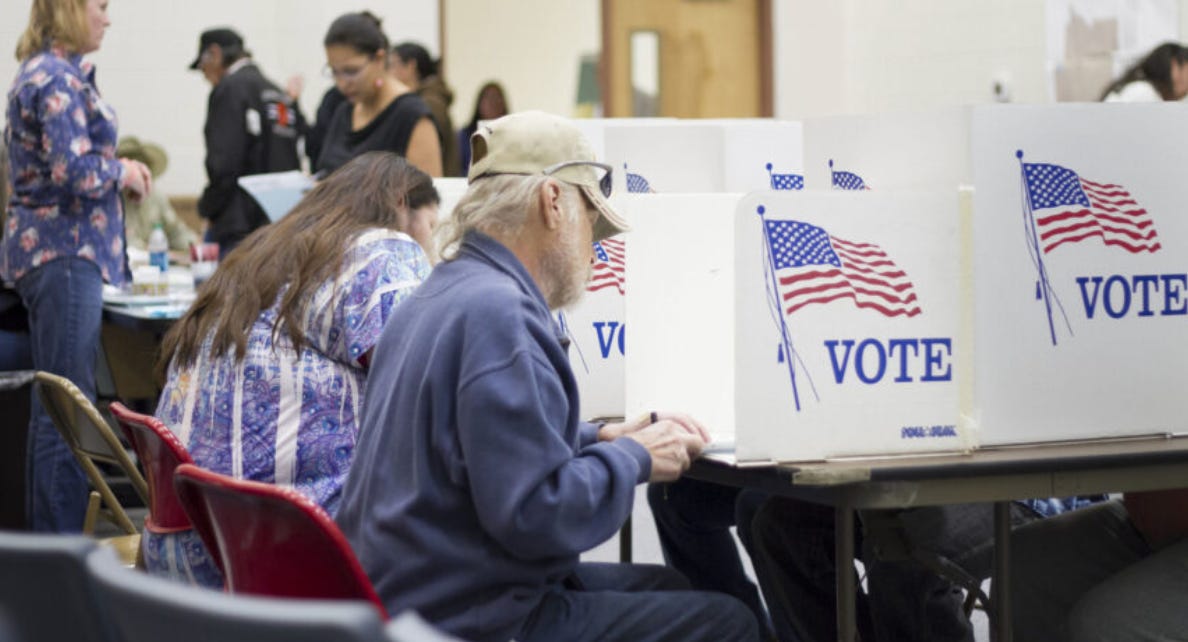
Tomorrow, New York voters will head to the polls in a handful of congressional primaries that remain genuinely competitive. Most of the state’s House races are effectively settled before Election Day, with incumbents facing either no opposition or only nominal challengers. But seven contests stand apart: six Democratic primaries and one Republican primary where the outcome remains uncertain.
For Civly, these races represent something more than another election. They are the first public test of a new capability we call Synthetic Polling.
For decades, political campaigns have relied on traditional polling to understand the electorate. Polling is expensive, slow, and increasingly unavailable in many congressional districts. When we began thinking about polling, a lifelong pollster told me on a Zoom call that “30 years ago 20% of people would answer the phone and tell you who they were voting for, now, it’s about one half of one percent.” The statistical problem is obvious, in order to get a sample size large enough to eliminate chance, pollsters have to accept that those people answering the unknown number on their cell phone share some unseen characteristic that makes them answer that call. In science, this is known as a “selection bias.”
We wanted to know whether artificial intelligence could help fill that gap.
Synthetic Polling uses large language models, public election data, fundraising information, demographic patterns, candidate profiles, endorsement networks, and historical voting behavior to simulate how voters are likely to behave in a given race. Rather than asking voters directly whom they support, the system attempts to model the decision-making process of thousands of individual voters and aggregate those simulated choices into a forecast.
This is not necessarily intended to replace polling. It is intended to supplement it, particularly in races where polling does not exist.
Before publishing any forecasts, we subjected the system to an extensive, retrospective backtest. We selected seventeen historical New York Democratic congressional primaries and evaluated the model as though it had never seen those races before. The goal was not to identify whether the model could explain elections after the fact, but whether it could make predictions under conditions of uncertainty.
The results were encouraging.
Across the seventeen races, the model correctly identified the winner in fourteen contests, with an accuracy of approximately eighty-two percent. Median vote-share error was roughly six percentage points, while average error landed closer to eight points due to several unusually difficult races featuring celebrity candidates, fragmented fields, or highly unusual dynamics.
More importantly, the model demonstrated a consistent understanding of relative candidate strength. Even when the exact percentages missed, the ordering of candidates and the overall shape of the race were correct.
We then attempted to improve the system.
One weakness became apparent immediately. The raw simulation tended to underweight candidates whose support derived from familiarity, fundraising advantages, or institutional backing rather than ideological alignment. In other words, it sometimes underestimated the power of name recognition.
To address this, we tested several enhancements.
Fundraising data produced the largest improvement and was incorporated into the final model. Simulated low-information voters: representing citizens who vote based on familiarity rather than policy preferences, also modestly improved performance and remain part of the forecasting process.
Other additions failed. Modeling turnout patterns produced almost no measurable benefit. Introducing ideological scores actually reduced accuracy by overemphasizing progressive candidates in races ultimately won by moderates. Detailed analyses of fundraising composition, including average donation size and geographic distribution of contributions, added little value beyond the information already captured by total fundraising and candidate positioning.
The final product is therefore intentionally simple. We use only the variables that improve prediction and discard those that do not.
That brings us to tomorrow’s races.
Among the contests we examined, the model expresses the highest confidence in New York’s First Congressional District, where Christopher Gallant holds a significant advantage over Lukas Ventouras. The race presents an ideal forecasting environment: a straightforward two-candidate contest with clear fundraising differences and no major celebrity or institutional wildcards.
At the other end of the spectrum sits New York’s Seventeenth District. With no independent public polling and a crowded field, the race is considerably more difficult to model. Cait Conley emerges with a slight advantage, but this should be interpreted as a lean rather than a firm prediction.
Several races fall somewhere in between.
The Democratic primary in New York’s Seventh District appears to be a genuine toss-up between Claire Valdez and Antonio Reynoso, with Julie Won remaining within striking distance. Public polling and our simulations tell essentially the same story: an unsettled electorate and a race that could break in multiple directions.
The marquee contest is New York’s Twelfth District. While media attention has focused heavily on nationally known figures such as George Conway and Jack Schlossberg, both public polling and our model suggest a different reality. Micah Lasher emerges as the frontrunner, with Alex Bores positioned as his primary challenger. In this race, traditional polling proved especially valuable because it corrected assumptions that celebrity and fundraising alone would drive voter behavior.
Meanwhile, New York’s Tenth District produces perhaps the most striking result. Both independent polling and our simulation suggest Brad Lander holds a substantial advantage over incumbent Dan Goldman, demonstrating that incumbency remains powerful but not invincible.
The remaining races: New York’s Thirteenth and Twenty-First Districts, reflect varying degrees of uncertainty. One of the biggest problems in political forecasting is false precision. Presenting a candidate at 54 percent rather than 52 percent often conveys a level of certainty that does not actually exist. Elections are messy. Voters change their minds. Turnout surprises happen. Late news matters.
Our forecasts carry estimated margins of error ranging from approximately four to six percentage points, and our historical testing suggests real-world uncertainty may be wider still. Readers should focus on relative positioning and broad trends rather than exact percentages.
Ultimately, the purpose of this exercise is not to prove that artificial intelligence can predict elections perfectly. It cannot.
The goal is to determine whether AI can generate useful intelligence in races where little information exists. Can it identify likely winners? Can it distinguish competitive contests from noncompetitive ones? Can it provide campaigns and observers with a better starting point than guesswork?
Tomorrow we find out.
By this time next week, New York voters will have delivered the verdict not only on these candidates, but on our forecasting system as well. We intend to publish the results, compare every prediction against reality, and evaluate where the model succeeded and where it failed.
Trust is not built through bold claims. It is built through transparent testing, honest uncertainty, and a willingness to measure performance against the real world.
Synthetic Polling is our first attempt to do exactly that.
I hope your approach works but I wish you would stop calling it synthetic polling. It has nothing to do with polling, that is, contacting people to learn their opinions. It's the use of factors OTHER THAN polling to predict an outcome. It would be more transparent to call it non-polling or anti-polling than synthetic polling.
Bravo! Get Civly into the social sciences. Academia has wrestled with predictions, like forever. There is more control of the respondent pools but analyses and outcomes can be tricky or stretched beyond the findings. More important, deciding what variables should be included and studied would really benefit from AI, based on exhaustive review of relevant literature. I can see where an entire study could be framed by the structures you have outlined for supplementing polls' findings. Even though the trump administration has tried to decapitate research throughout the government and the schools, there is still good money to be found and a crew of eager researchers who want to improve how they do their work and what it means. Your updates on Civly are much appreciated. As usual, you are ahead of the curve.